Never confuse complacency with stability.
If something’s not working, stop doing it.
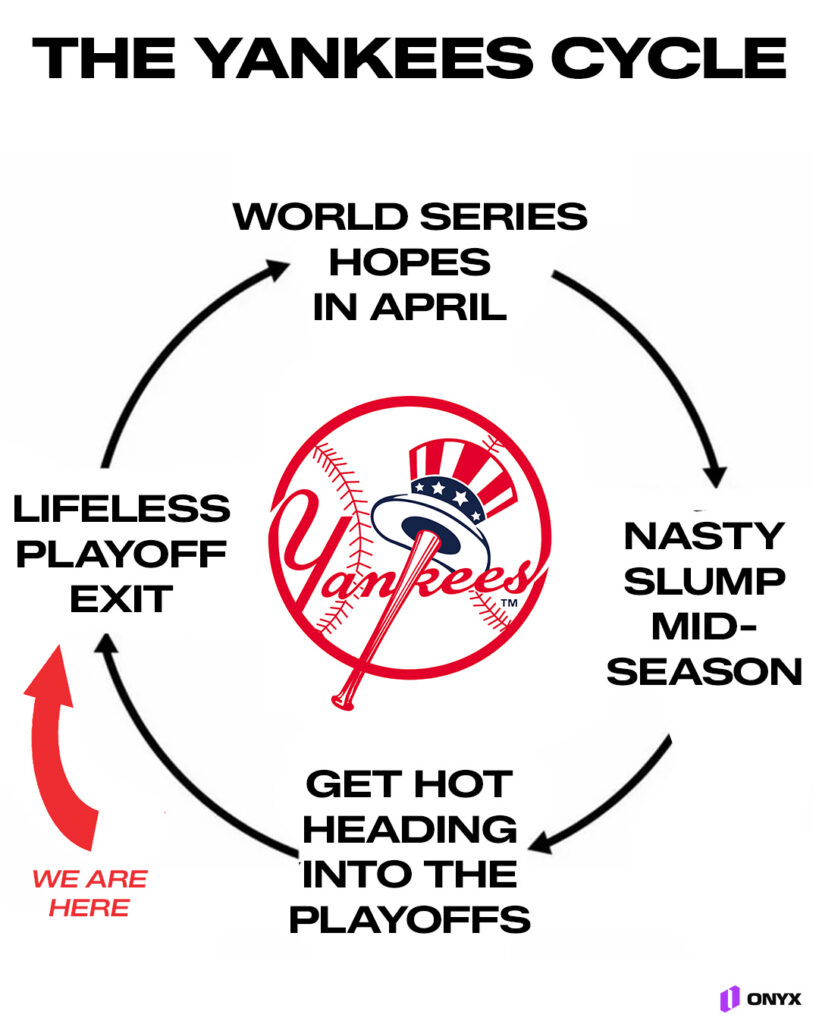
On cue, the NY Yankees were eliminated in a humiliating three game sweep last week by the Tampa Rays.
This is a disturbing, yet familiar pattern in the Yanks post-season appearances under current manager Aaron Boone.
It’s simple, when they face a good team, they lose.
Boone’s Yankees are 18-5 against lower seeded opponents, and 9-26 against teams with better records. (This includes the World Series.)
Their winning percentage against the lower rated teams is 78.3% It’s a different story against the superior teams. The Yanks win only 25.7% of the time for a loss gap of an unacceptable 52.5%.
Former Yankee, and best friend of team star Aaron Judge, Anthony Rizzo didn’t hold anything back when asked about the Yanks pathetic post-season record.
“…It’s the same thing every single year. If you talk to people there, they almost think it’s insanity. That’s the definition of insanity, if you think it’s going to change.” “They don’t win. They can’t beat the good teams. That’s how it’s been year after year. We got to the World Series in 2024 and stabbed ourselves in the gut multiple times. “He also said the Yankees should acquire a contact-oriented bat, said that Jazz Chisholm Jr’s postgame comments make him look lost as a player, that the Yankees don’t earn the right to say World Series or bust, and agreed with David Ross that, “change can be a good thing.”
Despite their abominable record in the only games that matter, current manager Aaron Boone has been guiding this playoff train wreck for nine seasons while GM Brian Cashman tenure is about to enter year 29.
For some inexplicable reason Cashman has called success in the playoffs a crapshoot. This means wins are mainly attributable to luck. In other words, the Yankees who lose every year due to inept fielding, dangerously low baseball I.Q., and a deluge of strikeouts during almost every key moment because – they’re unlucky. Owner Hal Steinbrenner concurs. As long as the Yanks sell out every game, make a good profit, and get to the playoffs each year why rock the boat?
Stability is given priority over a proud tradition of excellence.
The Yankees make the same mistakes every year and attribute this incompetency to fate.
What about investors?
In some ways, they are a mirror image of the playoff version of the Yankees. Repeating the same mistakes and expecting different outcomes.
- Chasing Performance: Too many investors consistently throw their money into whatever is going up whether they understand the asset or not. Fund flows tend to show money streaming into investments as they surge and fleeing in declines. Buying high and selling low is a suboptimal way to build wealth.
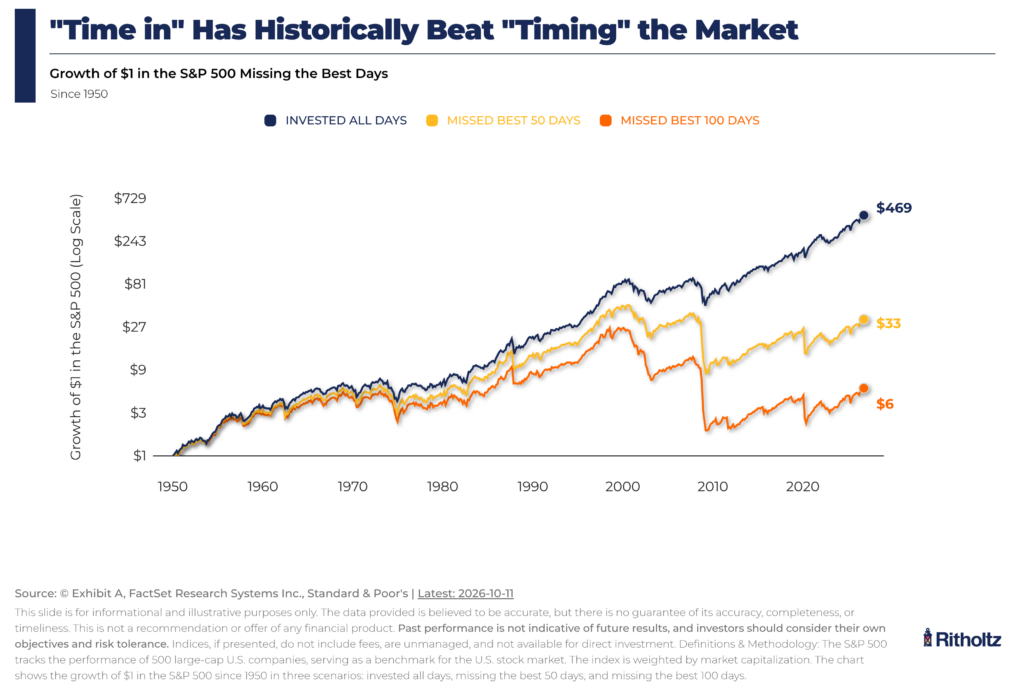
- Panic Selling In Downturns: When markets plummet fear overrides reason. all energy consolidates into one goal, stopping the bleeding. Loss aversion (Losses hurt twice as much as gains) drives this behavior. Unfortunately, many of the markets best days come right after the worst ones. Missing out on these surges have devastating long term impacts on investor’s portfolios.
- Overtrading: Doing nothing is a strategy is a lesson many investors never learn. Trying to time the market often results in two things, high taxes/ transaction costs and lackluster returns. As far as investing goes, it’s one of the few pastimes where trying harder leads to inferior outcomes.
The Yankees and many investors possess three commonalities. The same mistakes, different jerseys, and an equally confident postgame explanation.
The Yankee’s playoff baseball philosophy and bad investment policies are intertwined in the theory that learning from mistakes is overrated.
Why not just repeat them with more confidence?